Defining the Boundaries of AgeTech: Can Code Care?
AgeTech is moving fast: from risk scoring and monitoring to companions and care platforms. But alongside capability comes a deeper question: what should AgeTech leave to the humans?
This panel brings together leaders across caregiving, aging systems, and digital health to explore the boundaries, trade-offs, and design responsibilities shaping AgeTech today.
This conversation centers on four tensions shaping AgeTech design and adoption:
Human experience and care: How can technology strengthen care, connection, and autonomy?
Outcomes and trade-offs: What should AgeTech optimize for, and how do we weigh competing goals
Trust and accountability: What builds trust in AI-enabled AgeTech
Real-world adoption and impact: What does it take for AgeTech to work in everyday rhythm of homes, communities, care work, and policy?
By the end, viewers gain a practical way to evaluate AgeTech; whether you build it, buy it, fund it, deploy it, or use it.

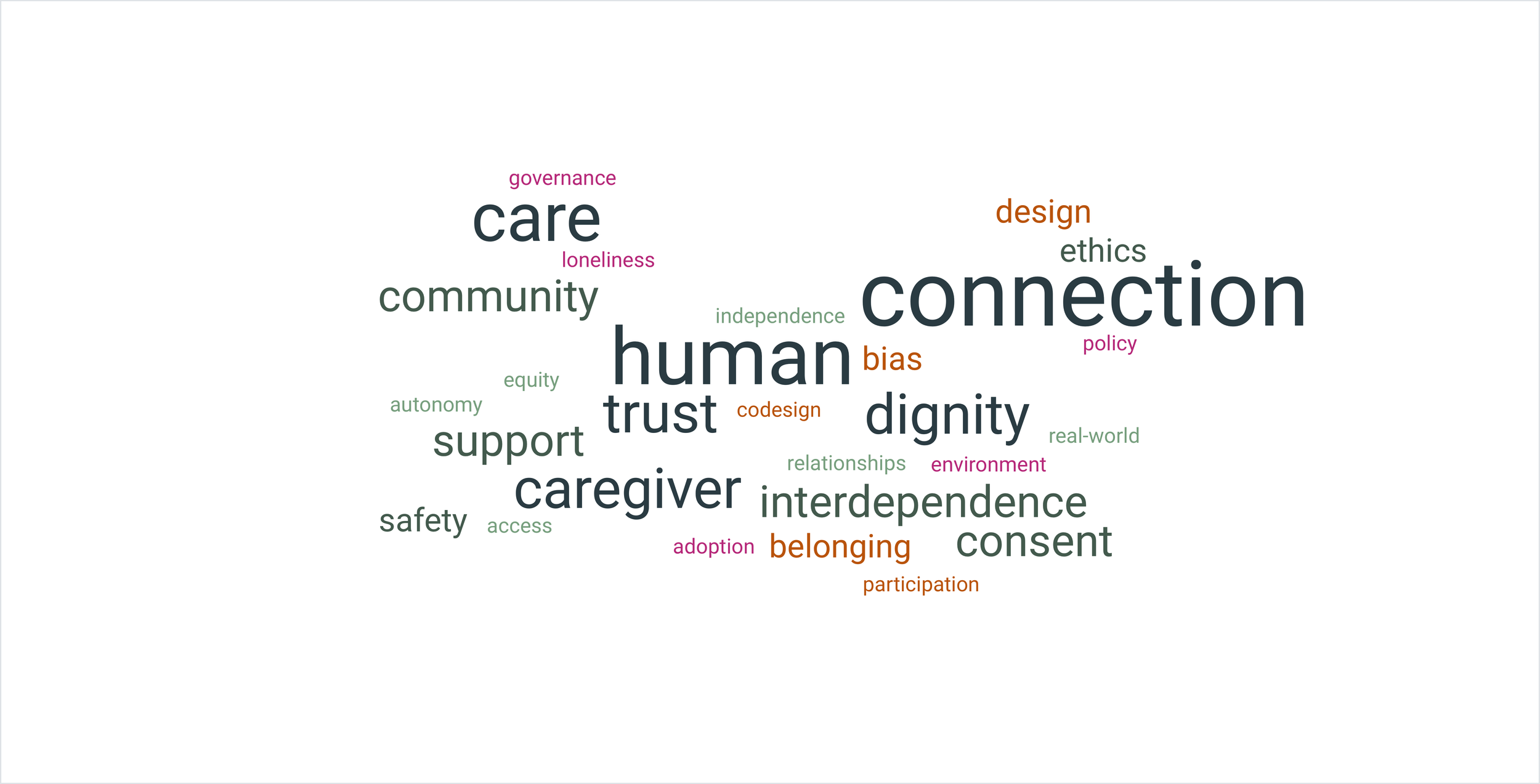
What the room said:
During the session, participants were asked to share what AgeTech should protect.
Across roles and geographies, the dominant themes were connection, care, and human emerged as the major themes! This reinforces that AgeTech is fundamentally about human values, not just capability.
Comments from the Audience



Sign up for future events in the series!