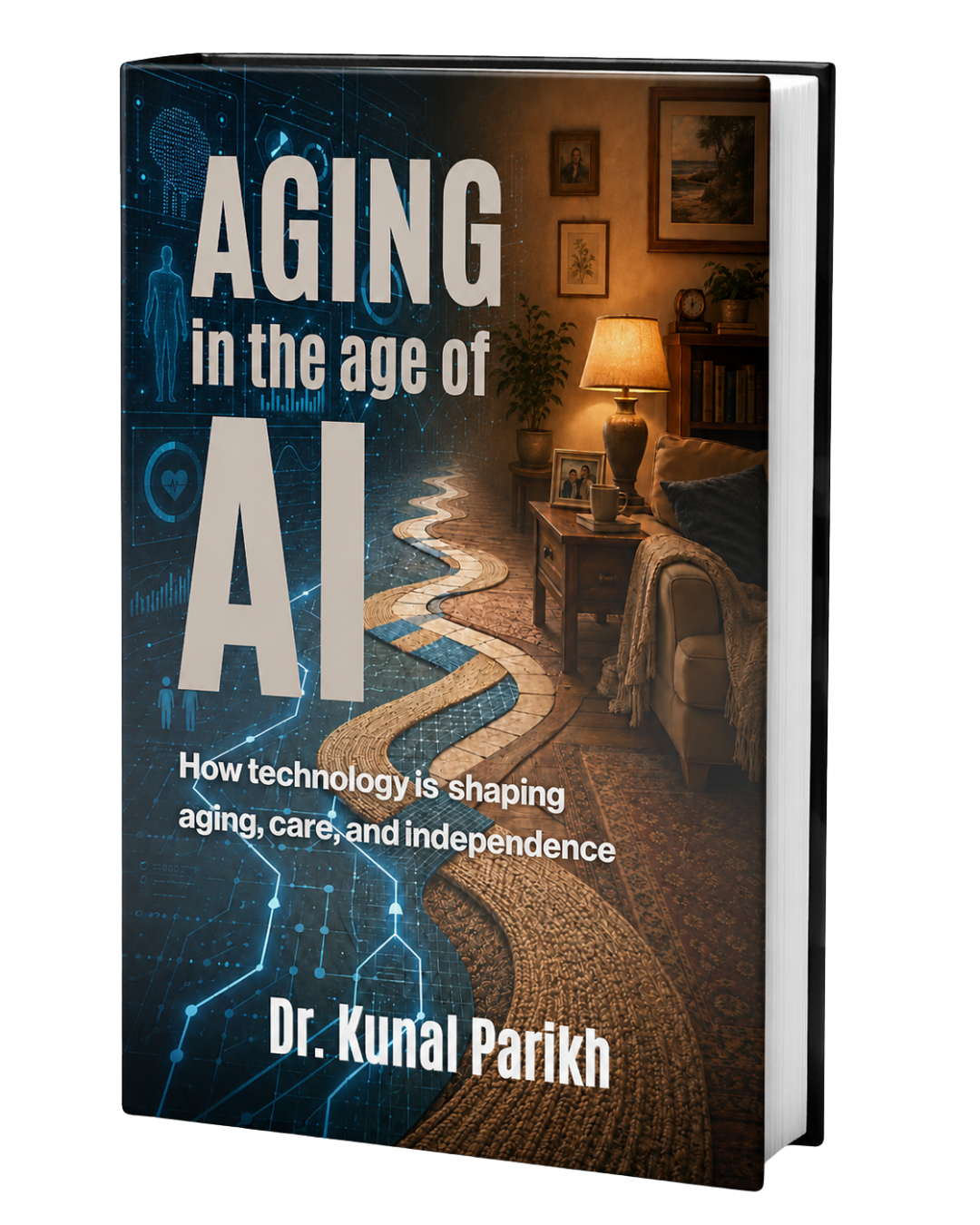
Coming early 2027: Aging in the Age of AI
Technology and AI are not magical solutions to the challenges of aging and caregiving. Like any tool, they come with benefits and tradeoffs. Aging in the Age of AI helps older adults and caregivers trace the tradeoffs they make when they invite technology into the care and aging dynamic, and make informed decisions about what role they want tech to play in their lives.
Join the Waitlist!
Most older adults want to stay in their own homes. That preference changes what technology even is. It stops being a matter of taste and becomes a tool you reach for because the alternative is leaving the place where you built your life.
But every product carries more than its function. It arrives holding quiet assumptions about what aging should look like and whose independence counts. Those assumptions were not invented by the engineers. They were inherited from a culture that has never examined how it feels about growing old.
None of this makes the technology good or bad. A fall sensor might buy you another year at home. It also watches your every move. The only real work is deciding which trades you can live with. That work belongs to you, not to the system that built the product. Staying awake to it is the whole point of Aging in the Age of AI.
Resources
✳︎
Resources ✳︎

This map classifies AgeTech interventions by how they claim to benefit older adults and caregivers. The intent is to make the field legible to navigators and AAAs.

AgeTech is moving fast: from risk scoring and monitoring to companions and care platforms. But alongside capability comes a deeper question: what should AgeTech leave to the humans?
Watch this webinar to gain a practical way to evaluate AgeTech; whether you build it, buy it, fund it, deploy it, or use it.